
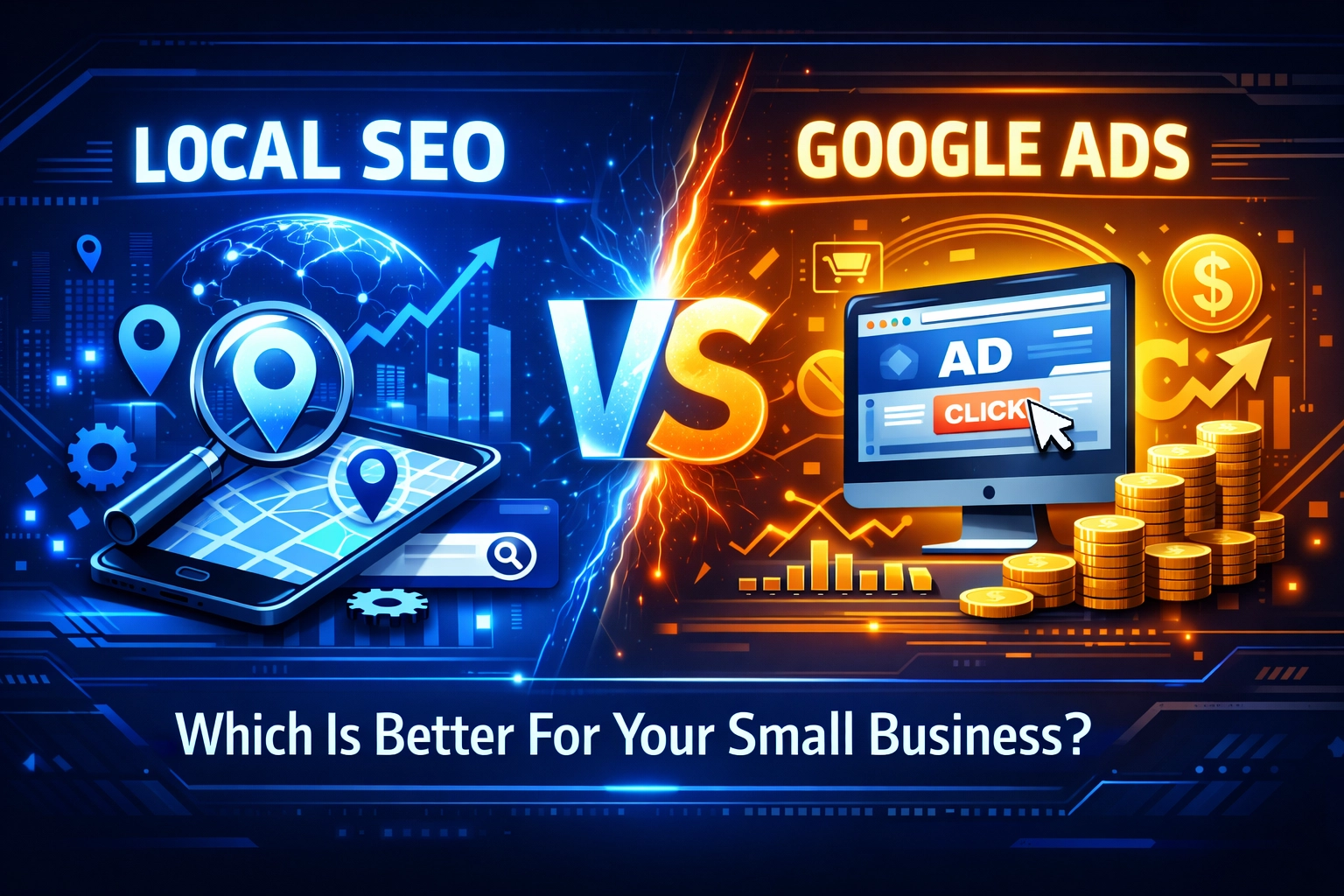
If you're a small business owner trying to get more customers through Google, you've probably asked yourself this question a hundred times: Should I invest in Local SEO or Google Ads?
Here's the truth: Most businesses don't need to choose one or the other: they need both. But how you split your budget and which one you prioritize depends entirely on where your business is right now and what you need to happen next.
Let's break it down in plain English so you can make the smartest decision for your business.
The Quick Answer (Because You're Busy)
Neither strategy is universally "better." Google Ads gets you leads fast: sometimes within days. Local SEO builds momentum slowly, but delivers sustainable, long-term growth that compounds over time.
Think of it this way:
- Google Ads = Renting billboard space. You pay for visibility, and the second you stop paying, your traffic disappears.
- Local SEO = Owning land. It takes time and effort to build, but once you rank, you own that digital real estate.
The smartest play? Use Google Ads to fill your pipeline immediately while you build your Local SEO foundation. Then, as your organic rankings climb, shift more budget toward SEO and reduce ad spend.

When You Should Choose Google Ads First
Google Ads makes sense when you need results right now and can't afford to wait 6-12 months for SEO to kick in.
Prioritize Google Ads if:
- You're launching a new business or location and need immediate visibility to validate your market
- Your industry is hyper-competitive (think personal injury lawyers or HVAC in a major city) where organic ranking could take a year or longer
- You're testing a new service or offer and want fast feedback on whether people actually want it
- You have seasonal peaks and need to capture high-intent searches like "emergency plumber near me" or "same-day appliance repair"
- Your profit margins are healthy enough to absorb the cost-per-click without bleeding cash
With Google Ads, you get instant control. You can turn campaigns on and off, adjust budgets daily, and target specific zip codes or neighborhoods. If you need 10 leads this week to keep the lights on, Google Ads is your answer.
When You Should Choose Local SEO First
Local SEO is the better starting point if you're playing the long game and want to build a sustainable lead generation machine that doesn't require constant ad spend.
Prioritize Local SEO if:
- You have time to build momentum and don't need immediate results (you're not desperate for cash flow)
- Your budget is tight and you'd rather invest in content, optimization, and link building that pays dividends for years
- You're in a niche market where ranking for specific local keywords is achievable within 3-6 months
- Your profit margins are slim and paying $15-$50 per click isn't sustainable long-term
- You want to dominate "near me" searches and own your Google Business Profile listing
Local SEO requires patience, but once you rank in the top 3 of the Google Map Pack, you're capturing high-intent leads without paying per click. Over time, your cost-per-lead drops dramatically compared to ads.

The Key Differences (Side-by-Side)
| Factor | Google Ads | Local SEO |
|---|---|---|
| Speed to Results | Immediate (days to weeks) | Slow burn (3-12 months) |
| Cost Model | Pay-per-click (ongoing expense) | Upfront investment in optimization, content, reviews |
| Long-Term Sustainability | Stops when you stop paying | Compounds over time; keeps working 24/7 |
| Control & Flexibility | Total control over budget, keywords, targeting | Less direct control; requires consistency and patience |
| Best For | Fast validation, seasonal spikes, competitive markets | Long-term growth, tight budgets, niche markets |
The Hybrid Approach (What We Actually Recommend)
Here's what works for 90% of small businesses: Don't choose. Do both strategically.
Start with Google Ads to get leads in the door while you're simultaneously building your Local SEO foundation. This gives you immediate cash flow to reinvest in SEO work: optimizing your Google Business Profile, creating local content, earning reviews, and building citations.
As your organic rankings improve and you start capturing more "free" traffic from Local SEO, gradually shift budget away from ads and into SEO maintenance.
Budget Allocation Based on Your Situation
Not sure how to split your marketing budget? Here's a practical guide:
If you're an established business in peak season:
- 70% Local SEO (you're already ranking, so double down)
- 30% Google Ads (capture overflow demand and competitive keywords)
If you're a new location or brand:
- 60% Google Ads (you need visibility and cash flow now)
- 40% Local SEO (build authority for the future)
If you're in a highly competitive market:
- 50% Google Ads, 50% Local SEO (balanced approach to stay competitive while building equity)
The key is to reevaluate every quarter. As your SEO improves, you'll naturally need less ad spend to maintain the same lead flow.

The Real Power of Combining Both Strategies
When you run Google Ads and Local SEO together, you dominate search results. Imagine this:
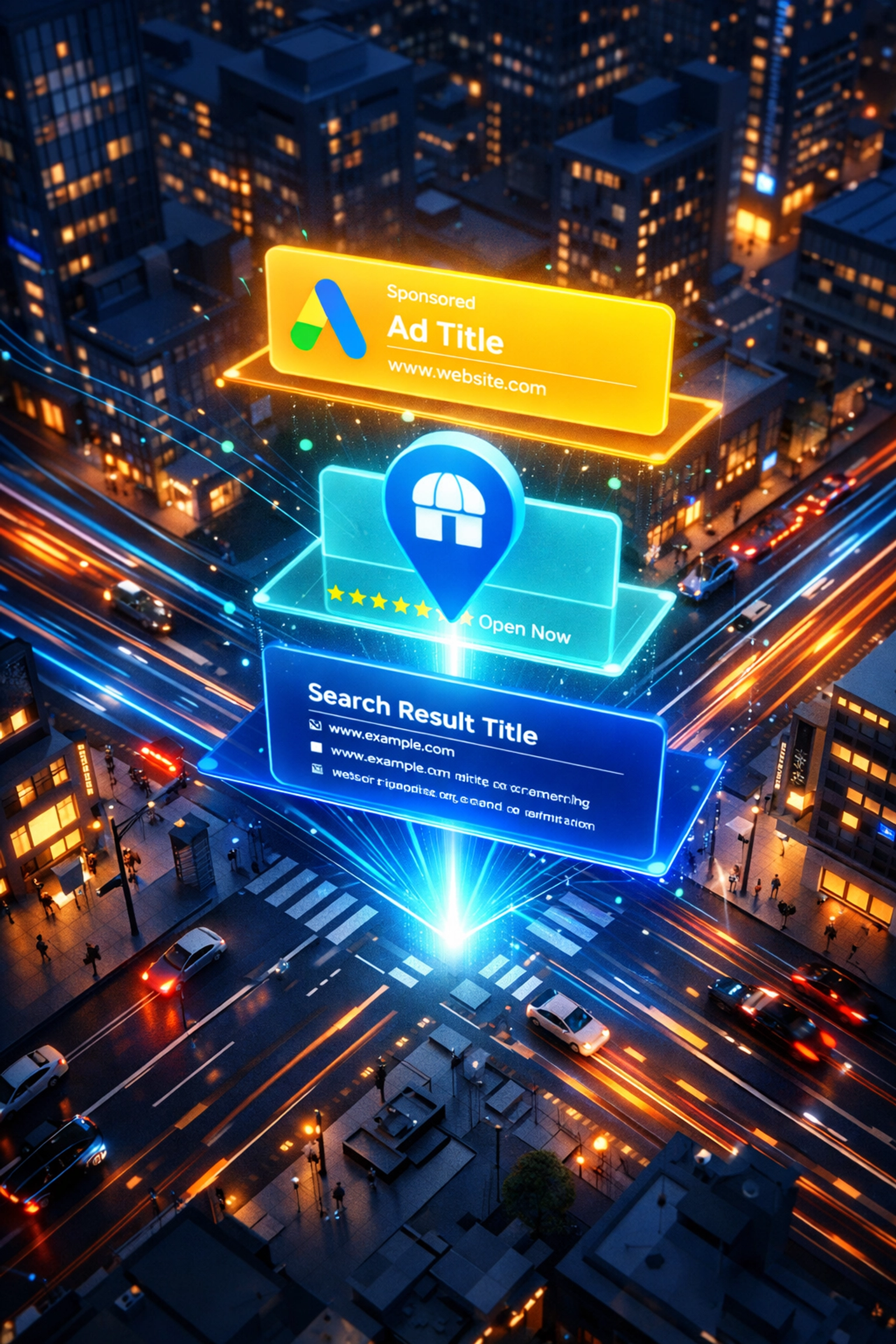
A potential customer searches "plumber near me" and sees:
- Your Google Ads listing at the very top with a Google Guarantee badge
- Your Google Business Profile in the Map Pack with 4.9 stars and 100+ reviews
- Your website ranking organically in the top 5 results
You've just created three separate touchpoints in a single search. That kind of visibility doesn't just get clicks: it builds trust and credibility. Customers think, "This company must be legit: they're everywhere."
You also cover the full customer journey. Google Ads captures people in the early research phase (informational searches like "how much does roof repair cost"), while Local SEO dominates when they're ready to hire ("roofing contractor near me").
A Real-World Example
Let's say you own a local HVAC company. Here's how the hybrid strategy plays out:
Month 1-3:
- Launch Google Ads targeting "emergency AC repair" and "furnace installation [your city]"
- Optimize your Google Business Profile with photos, services, and weekly posts
- Start publishing helpful blog content ("How to Know When Your AC Needs Repair")
- Ask happy customers for reviews
Month 4-6:
- Your Google Ads are generating 15-20 leads/month at $35/lead
- Your Google Business Profile is ranking #4 in the Map Pack
- Organic traffic is starting to trickle in from blog posts
Month 7-12:
- You're now ranking #2 in the Map Pack
- Organic leads are up to 10-15/month (zero cost per lead)
- You reduce Google Ads budget by 30% and maintain the same total lead volume
- Your cost-per-lead drops from $35 to $22
By Year 2, you're spending half as much on ads and getting double the leads. That's the compounding effect of Local SEO.
What Should You Do Next?
If you're still running your business on referrals alone or dumping money into ads without a long-term SEO plan, you're leaving money on the table.
Here's your action plan:
-
Audit where you stand today. Are you ranking in the Google Map Pack? Do you have a Google Business Profile that's fully optimized? How much are you currently spending on ads?
-
Pick a strategy based on urgency. Need leads this week? Start with Google Ads. Have 3-6 months to build? Prioritize Local SEO.
-
Commit to the hybrid approach. Allocate budget to both and track your cost-per-lead monthly. Adjust as you go.
At My Business Local, we help small businesses do exactly this: build a system that combines immediate lead flow with long-term growth. Whether you need help with Google Ads, Local SEO, or both, we've got you covered.
Ready to stop guessing and start growing? Let's build a custom strategy for your business. Get in touch with us today and let's map out your next 90 days.