
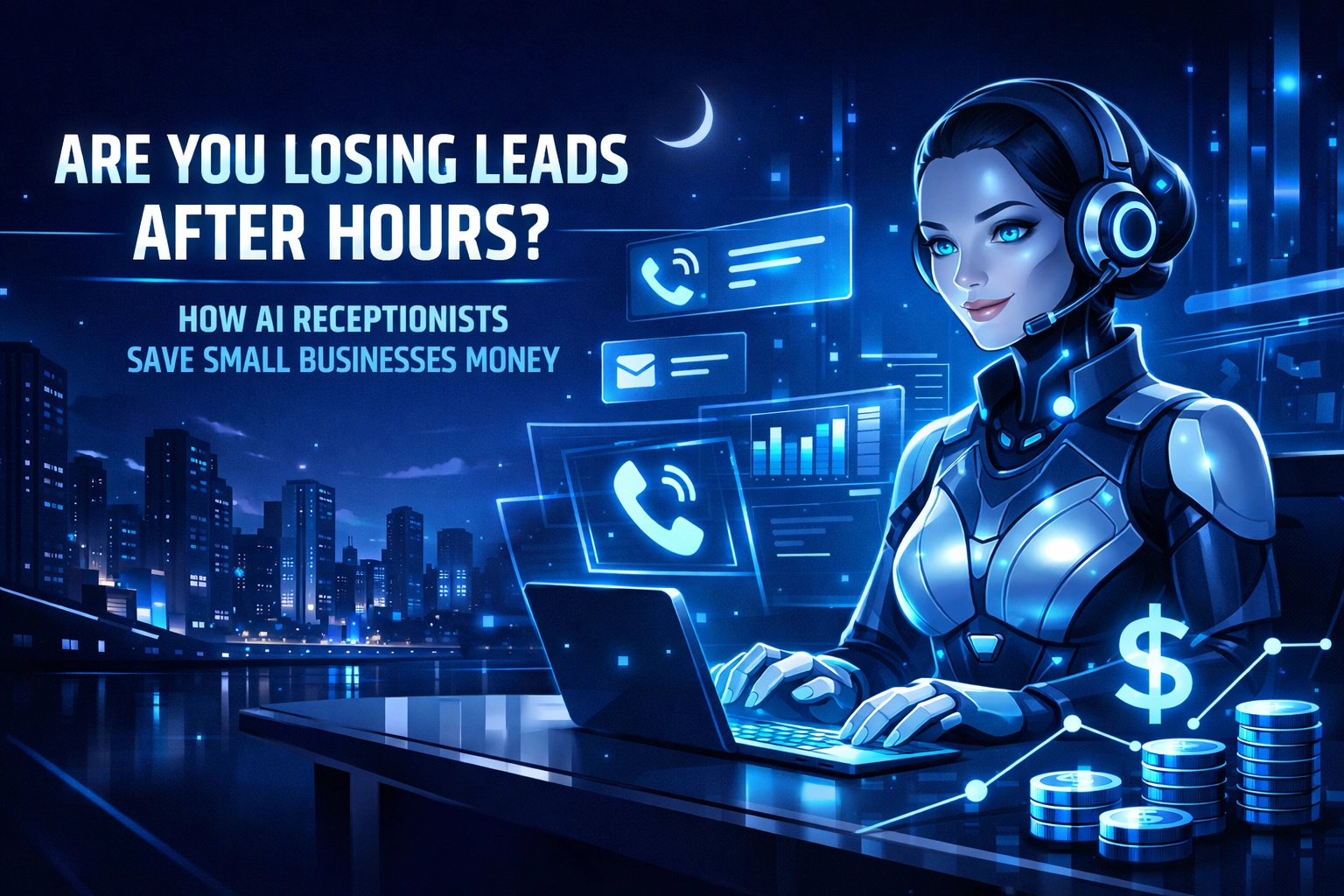
It's 9:47 PM on a Tuesday. A homeowner's water heater just burst. They're frantically Googling plumbers, calling every number they can find. Your phone rings… and rings… and goes to voicemail.
By 9:50 PM, they've already booked someone else.
You just lost a $2,500 emergency call because you weren't available after hours. And here's the painful truth: this happens way more often than you think.
The Hidden Cost of "Closed for Business"
Most small business owners assume that missed calls outside of 9-to-5 aren't a big deal. "People can leave a voicemail," they think. "They'll call back tomorrow."
Except they don't.
Studies show that 85% of callers who reach voicemail won't leave a message. Even worse? Over 60% will immediately call your competitor instead of waiting for a callback.
Let's do some quick math. If your average customer is worth $1,000 and you're missing just 5 calls per week after hours, that's $20,000 in lost monthly revenue. For a small business, that's not pocket change: that's payroll, rent, and growth opportunities walking out the door.
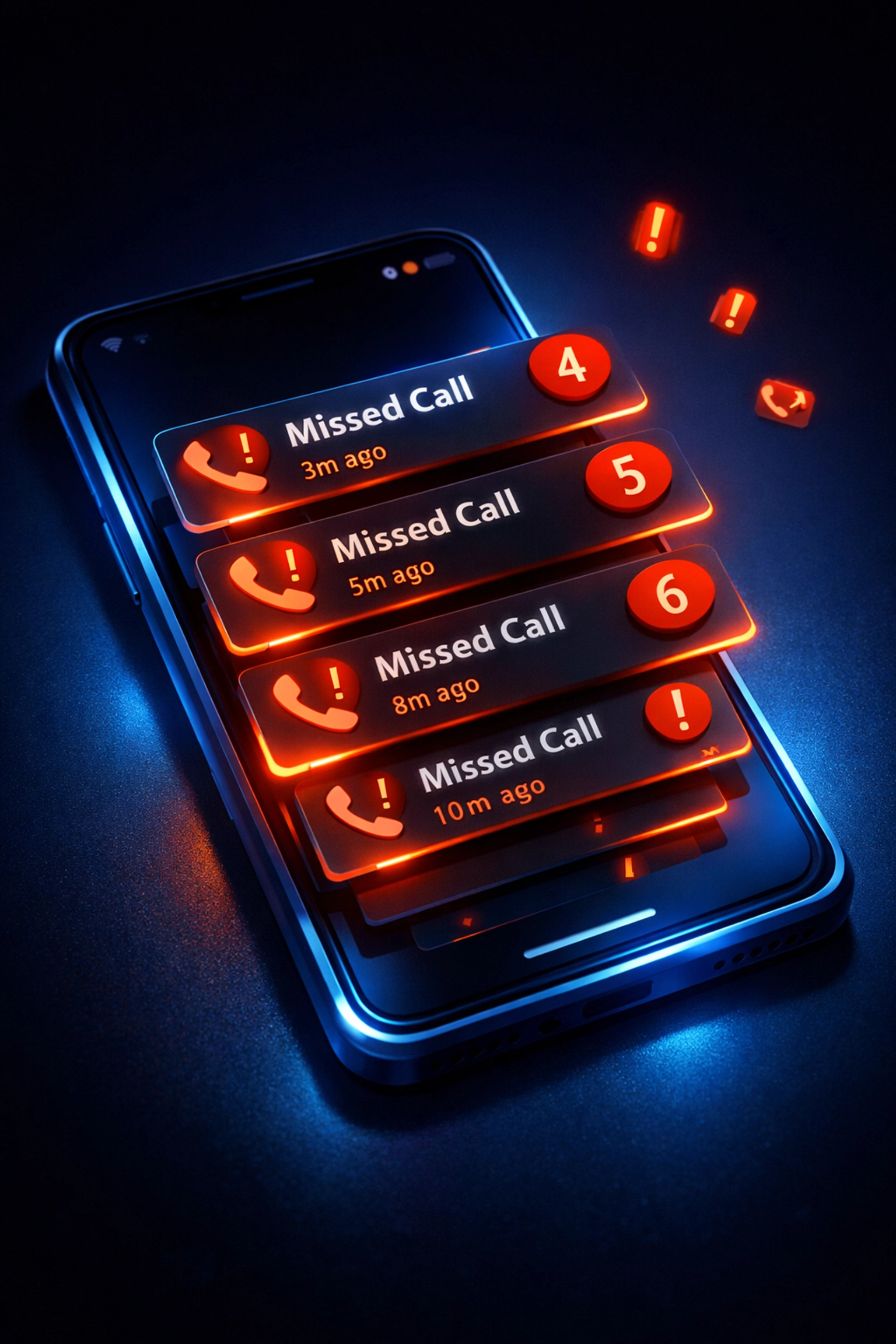
The problem isn't just volume. It's timing. When someone reaches out after hours, they're often in urgent need mode. Whether it's a burst pipe, a legal emergency, a broken HVAC system in August, or a dental crisis: these are high-intent, high-value leads. They're ready to buy RIGHT NOW. And if you're not there to answer? Someone else will be.
What Happens When You Miss After-Hours Opportunities
Let's paint the full picture of what you're actually losing:
Immediate Revenue Loss: That urgent call we mentioned? It's not just one transaction. It's the potential for repeat business, referrals, and long-term customer relationships. One missed emergency call could mean losing a customer worth $10,000+ over their lifetime.
Competitor Advantage: While you're closed, your competitors might be answering. Or worse: they might have systems in place that YOU don't. In competitive markets, being available 24/7 is becoming the baseline expectation, not a luxury.
Your Reputation Takes a Hit: In the age of Google reviews, being "impossible to reach" is a common complaint. Customers don't care that it's 8 PM on Saturday. They just know you weren't there when they needed you.
Your Team Burns Out: Maybe you've tried having staff take turns being on-call. How's that working? Between interrupted family dinners, weekend stress, and overtime costs, the "human solution" to after-hours coverage is exhausting and expensive.
Enter the AI Receptionist: Your 24/7 Lead-Capturing Machine
Here's where things get interesting. AI receptionists have evolved dramatically in 2026. We're not talking about robotic, frustrating phone trees that make people want to throw their phones. Modern AI receptionists sound natural, understand context, and actually solve problems.
Here's what happens when a call comes in after hours with an AI receptionist handling things:
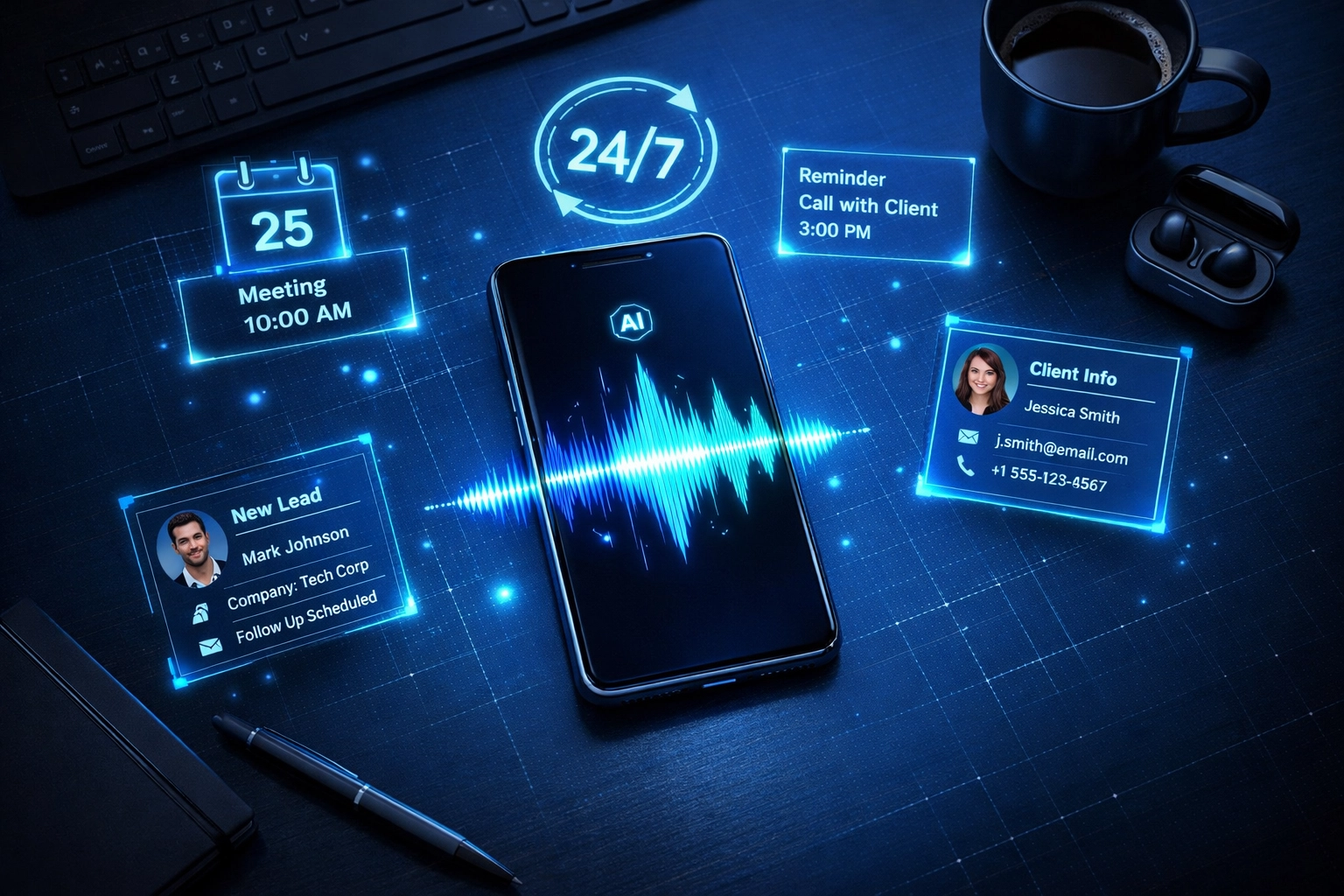
Instant Answer: The phone rings once, maybe twice. A friendly voice answers professionally, identifies your business, and asks how they can help: whether it's 3 PM or 3 AM.
Smart Conversation: The AI can understand natural language. "I need someone to fix my AC, it's not cooling" gets routed differently than "I want a quote for a new HVAC system." It asks qualifying questions, gathers key information, and determines urgency.
Immediate Booking: For straightforward requests, the AI accesses your real calendar and books appointments directly. No back-and-forth, no waiting until morning. The lead is captured and scheduled before they can call someone else.
Lead Qualification: Not all after-hours inquiries are emergencies. The AI can distinguish between "I'm browsing and have a question" and "I need help NOW," routing each appropriately and setting expectations.
Seamless Handoff: Complex issues or high-priority emergencies can be escalated to your on-call team with all the context already gathered. Your staff gets a text with the customer's info, their issue, and what they need: no fumbling through groggy conversations at 2 AM.

The Money-Saving Magic: Real Numbers That Matter
Let's break down why AI receptionists aren't just convenient: they're financially brilliant for small businesses.
Eliminate Expensive Staffing Costs
Hiring a full-time receptionist costs $35,000-$45,000 annually (plus benefits, training, PTO, and turnover costs). Need evening coverage? That's another person. Weekend coverage? You're now looking at multiple employees working shifts.
An AI receptionist? Costs roughly $200-$500 per month depending on call volume. That's around $6,000 per year MAX for round-the-clock coverage. Do the math: you're saving $30,000+ annually while actually IMPROVING your availability.
Scale Without Adding Headcount
Here's something beautiful: your AI receptionist doesn't get overwhelmed. If three calls come in simultaneously at 10 PM, all three get answered immediately. Try doing that with a single human receptionist without hiring more people.
During your busy season, you don't need to hire temporary staff or stress about coverage. The AI scales instantly. When things slow down, you're not paying for idle time.
Your Team Focuses on What Actually Makes Money
Think about what your best people spend time on. Is answering the phone at 7 PM their highest value activity? Or would you rather have them closing deals, delivering services, and building relationships with existing clients?
AI handles the routine stuff: appointment scheduling, basic FAQs, direction requests, service hour inquiries. Your team handles the high-value conversations that require expertise and the human touch.
The result? Higher productivity, better morale, and increased revenue per employee.
Real-World Scenarios: Where AI Receptionists Shine
The HVAC Company: Summer hits and emergency calls spike. An AI receptionist fields after-hours calls, books emergency visits for $150-$300 service calls, and schedules non-urgent appointments. The owner estimates they're capturing an extra $15,000 per month in business that would've gone elsewhere.
The Dental Practice: Someone cracks a tooth at 9 PM. The AI receptionist asks about pain level, provides emergency care guidance, and books the first available appointment. The anxious patient feels taken care of immediately: and doesn't call the competitor down the street.
The Legal Firm: Potential clients often search for lawyers outside business hours after an accident or arrest. The AI captures their information, asks qualifying questions, and schedules consultations. The firm now converts 40% more leads simply by being "available" when prospects are ready to talk.
The Home Services Business: Whether it's plumbing, electrical, or locksmith services, emergencies don't wait for business hours. An AI receptionist distinguishes between "can wait until tomorrow" and "I need help NOW," dispatching accordingly and capturing every possible revenue opportunity.
Getting Started Doesn't Have to Be Complicated
The beauty of modern AI receptionists is how quickly they integrate into your existing workflow. Most systems connect to your current phone number, sync with your calendar (Google Calendar, Outlook, whatever you use), and can be customized to match your business's specific needs and language.
Setup typically takes days, not months. You're not replacing your entire phone system or learning complicated new software. You're adding an intelligent layer that works alongside your existing tools.
And here's the best part: you maintain complete control. You decide which types of calls get handled automatically versus escalated to humans. You set the business rules, the pricing, the scheduling parameters. The AI executes your playbook perfectly, every single time.

The Bottom Line: Can You Afford NOT To?
Let's bring this home. Every small business is looking for ways to increase revenue while controlling costs. AI receptionists check both boxes simultaneously:
✅ Capture more leads by being available 24/7
✅ Save $30,000+ annually versus hiring additional staff
✅ Improve customer experience with instant, professional responses
✅ Scale effortlessly during busy periods
✅ Let your team focus on high-value work
The question isn't whether AI receptionists work: they absolutely do. The question is: how much money are you leaving on the table by NOT having one?
At My Business Local, we help small businesses implement smart solutions that drive real growth. Whether it's AI-powered lead capture, local SEO that gets you found, or websites that actually convert visitors into customers, we're here to help you compete and win in 2026.
Ready to stop losing leads after hours? Let's talk about how AI tools can transform your business without breaking the bank.